
DevMeeting-2025-08-21
https://bugs.ruby-lang.org/issues/21508
DateTime and location
- 2025/08/21 (Tue) 13:00-17:00 JST @ Online
Next Date
- 2025/09/11 (Tue) 13:00-17:00 JST @ Online
Announce
About release timeframe
Ordinary tickets
[Feature #20925] Allow boolean operators at beginning of line to continue previous line (tenderlovemaking)
- It seems like Matz approved this feature
- Prism has a PR to support it
- Should we merge the PR to support it?
Discussion
- nobu: I have a parse.y implementation.
- shyouhei: Is this allowed?
foo # && bar && baz - nobu: yes it does.
- akr:
&&andandhave different precedences, not even adjacent. There are other operators in between. Should they also be able to insert newlines? - mame: I don’t like everything become looser.
Conclusion:
- matz: go ahead
[Feature #21532] Implement Pathname in Ruby (tenderlovemaking)
- @Eregon has made a PR that moves Pathname to Ruby
- I reviewed the translation to Ruby and it seems good. Can we merge it?
Discussion:
- akr: Does it handle
$&well forPathname#sub? - shyouhei: It seems yes. Not everything is translated back to Ruby.
Pathname#subremains in C.
Conclusion:
- akr: Persuaded. OK to merge.
[Feature #21533] Introduce Time#am? and Time#pm? (matheusrich)
- Thoughts on the name and functionality?
- I think this is the less ambiguous way to have info about a part of the day that works across cultures (and is consistent with strftime)
Discussion:
- akr: No. 12pm is culture dependent.
- mame: OP says the proposal is consistent to strftime.
- naruse: strftime just mimics libc routine, not our invention.
- akr: aaand libc’s strftime is locale dependent.
- matz: linux man page has definitive
%pdescription by the way, though. - mame: natural interpretation
FYI https://docs.oracle.com/javase/jp/8/docs/api/java/util/Calendar.html AM_PM field
10 am
11 am
12 pm
 1 pm
 2 pm
- akr: description by 国立天文台
10 am
11 am
12 am
 1 pm
 2 pm
- ko1: Java’s definition is
hour < 12(same as the OP’s pull request) - naruse: https://en.wikipedia.org/wiki/12-hour_clock#Confusion_at_noon_and_midnight
- https://www.govinfo.gov/content/pkg/GOVPUB-GP-6eda8715b8f5cb1d8514325b97334d4f/pdf/GOVPUB-GP-6eda8715b8f5cb1d8514325b97334d4f.pdf
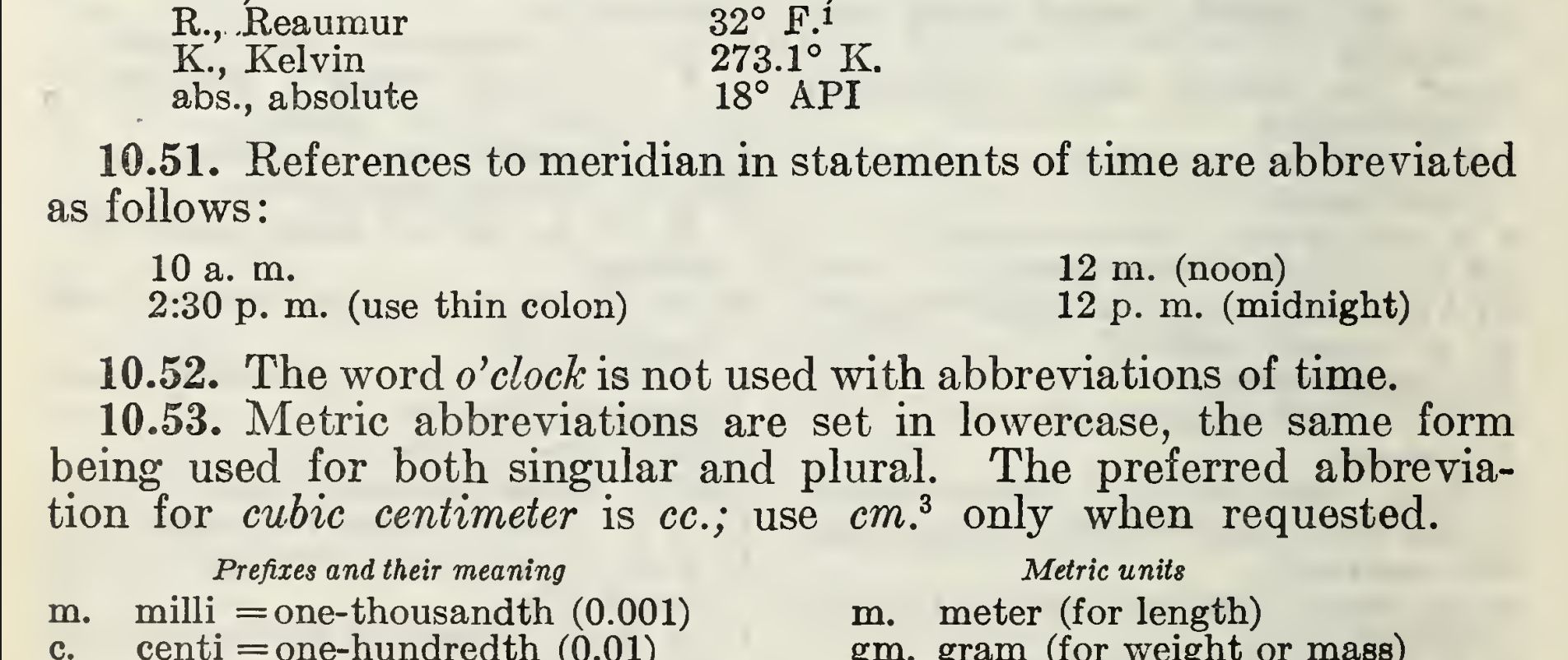
- https://www.govinfo.gov/content/pkg/GOVPUB-GP-6eda8715b8f5cb1d8514325b97334d4f/pdf/GOVPUB-GP-6eda8715b8f5cb1d8514325b97334d4f.pdf
Conclusion:
- There is no consesus whether 12:00 is AM or PM across the entire planet.
strftimemerely provides you a basic compatibility with other systems and we don’t want that spread across other parts of the language.
https://github.com/rubygems/rfcs/pull/60/files
akr: a gem usually at least depends libc.
- they are many library and their versions like openssl
- *BSD distributes kernel and libc. but other libraries are varied
- shyouhei: what is supported OSes?
- naruse: What Ruby Central wants
- ko1
- dependency for newer kernel APIs
- dependency for CPU features
[#21039] Ractor.make_shareable breaks block semantics (seeing updated captured variables) of existing blocks
Ractor.shareable_proc
ko1: I want to discuss aobut the spec of sharable proc with outer variables.
get "/", &(Ractor.shareable_proc do
  "Hello world"
end)

get "/" do # and get calls sharable_proc
  "Hello world"
end
New rule is proposed:
# NG: Raise an exception when creating a shareable proc
# The reason is because we're setting a local after the proc
# is created. This can cause possible race conditions / crashes

foo = 123
Ractor.shareable_proc { foo }
foo = Object.new # reassignment isn't allowed
The rule is proposed to avoid confusion such as:
counter = 0
get "/" do # assume the proc gets copied here so counter is 0
  "Hello world #{counter}"
end

counter += 123
controller = Sinatra.new do
  enable :logging
  helpers MyHelpers
end

map('/a') do
  run Sinatra.new(controller) { get('/') { 'a' } }
end
def define mid, var
  define_method(mid) &Ractor.sharable_labmda do
    return var
  end
  var = nil
end

define :foo1, 1
define :foo2, 2
Quited from https://bugs.ruby-lang.org/issues/21039#note-24
If people or I see this problem, I think they would react “WTF, Ruby is broken, nothing can be relied on anymore, not even local variable assignments”.
ko1’s summary and comment:
- To prohibit local variable assignment, we need to change the logic around local variables.
- as jhawthon said, we can assume:
foo = 123; Ractor.shareable_proc { foo }asfoo = 123; Ractor.shareable_proc(foo) {|foo| foo }(implicitly shadow’ed) as new syntax (Ractor.shareable_procis a marker)
- The problem is, if we allow to accept any Proc (like Sinatra’s case), we can’t assume which local variables are shadow’ed
- matz accept this implicit behavior https://bugs.ruby-lang.org/issues/21039#note-9
- Another idea: The issue is, new local variable semantics caused by implicitly because of
Ractor.shareable_proc(&bl). So introduce new shorter syntax? For example,-->(...){ ... }
counter = 0
get "/", --> do # assume the proc gets copied here so counter is 0
  "Hello world #{counter}"
end

counter += 123
- shyouhei: reminds me of https://bugs.ruby-lang.org/issues/12901
- akr: it could be possible to define a method and then use that method for handler, but that would be ugly.
- mame:
-do?
counter = 0
get "/" -do # assume the proc gets copied here so counter is 0
  "Hello world #{counter}"
end

counter += 123
get "/" do<shareable: true> # assume the proc gets copied here so counter is 0
  "Hello world #{counter}"
end
Ractor.sharable_procas proposedRactor.make_sharable(proc_object)#-> prohibitedRactor.sharable_proc(&proc_object)prohibitted- Sinatra-like is dead
- revert
Ractor.sharable_procand return tomake_shareable(ruby 3.4 way)Ractor.make_sharable(proc_object)#-> allowedRactor.sharable_proc{}# not defined
Ractor.sharable_procallows non literal blockRactor.make_sharable(proc_object)# prohibitedRactor.sharable_proc(&proc_object)# allowed- sinatra-like is rescued
Ractor.sharable_proc(self: nil){ ... }nil.instance_eval{ proc{ ... } }get "/", &nil.instance_eval{ -> do end } get "/" -do @foo = 42 ERB.result(binding) # implicitly refer to @foo endrealistic sinatra app https://railsgirls.jp/sinatra-app
- prevent lvar assignment proposed by eregon
- matz: no. I can accept to change the behavior in the block, but I can’t accept to chage the behavior of outer variables.
make_shareablesomewhat “freeze”s the local binding of the proc- matz: no, same as 3
- introduce new syntax like
-do- matz: not in favour of this specific
-dolook & feel, but can be an option - matz:
--> dodoes not seem shareable at all.
- matz: not in favour of this specific
[#21458] Test ‘make install’?
- shyouhei: Great idea. It is difficult to verify the installation is correct or not though.
- mame: I think it is a good small start to check only if
make installdoes not fail or not. We should discuss how to verify what is installed
[#21518] Statistical helpers to Enumerable
Enumerable#average-
Enumerable#median - matz: no strong pro or contra.
- naruse:
Enumerable#sumcan be implemented if each elements have+methods but#averagealso requires division. - shyouhei:
Enumerable#sortneeds something more than+though.
[#21385] Namespace: Suggesting a rename
- matz: Ruby Box!
[#21528] SyntaxError#message may have broken encoding with multibyte source under Prism
- nobu: It must be fixed
[#21529] Deprecate the /o modifier and warn against using it
- matz: I will reject
[#21520] Feature Proposal: Enumerator::Lazy#lazy_each
[#21527] Proposal: Math.log1p and Math.expm1
- matz: accepted
[#21515] Add &return as sugar for x=my_calculation; return x if x
[#21538] initialize_dup not called when duping class/module
- matz: It would be nice to have it fixed…?
[#21111] RbConfig::CONFIG['CXX'] quietly set to “false” when Ruby cannot build C++ programs
- nobu: https://github.com/nobu/ruby/tree/find_cxx
[#21540] prism allows foo && return bar when parse.y doesn’t
foo && return       # OK in parse.y, OK in prism
foo && return foo   # NG in parse.y, OK in prism
foo && return(foo)  # NG in parse.y, OK in prism
foo && (return foo) # OK in parse.y, OK in prism

->{return(1) + 1 }.call #=> 2
- matz: Fix it in the prism side
- nobu: ditto for break and next.
[#17316] @result @||= expensive_calculation
- matz: I am against the syntax
@||=
[#12282] Hash#dig! for repeated applications of Hash#fetch
- matz:
pathinfetch_pathresembles a file path in Ruby
[#21545] #try_dig, a dig that returns early if it cannot dig deeper
- matz: How about
{ a: "foo" }.dig(:a, :b, weak: true) #=> nil? - akr:
{ a: "foo" }.dig(:a, :b, exception: false) #=> nil? - matz: It is also acceptable, if the keyword is suitable
- ko1: what does
weakmean? - matz: Ok the name is not good
[#21543] Point ArgumentError to the call site
class TestClass
  def foo(x, y)
  end

  def bar
    foo(1)
  end

  def main
    bar
  end
end

TestClass.new.main
$ ruby test.rb
foo.rb:2:in 'TestClass#bar': wrong number of arguments (given 1, expected 2) (ArgumentError)

    foo/bar.rb:6: caller
    6 |    foo(1)
           ^
    foo.rb:2: callee
    2 |  def foo(x, y)
             ^
        from foo/bar.rb:6:in 'TestClass#bar'
        from foo.rb:10:in 'TestClass#main'
        from foo.rb:14:in '<main>'
$ gcc t.c
t.c: In function ‘main’:
t.c:4:3: error: too few arguments to function ‘f’
    4 |   f(1);
      |   ^
t.c:1:1: note: declared here
    1 | f(int x, int y){ return x; }
      | ^

$ cat t.c
f(int x, int y){ return x; }

main(){
  f(1);
}
https://x.com/blackenedgold/status/1957662677012214111 https://github.com/rust-lang/rust/pull/144232
Implement support for
becomeand explicit tail call codegen for the LLVM backend by xacrimon · Pull Request #144232 · rust-lang/rust
# Rust style
def foo
  return bar # not tail-call
  become bar # tail-call!
  be bar # old proposal
end
def bar
end

def foo
  # conflict with current syntax
  bar and return
  bar then return

  # ok (current: syntax error)
  and return bar
  return and bar
  return then bar
  return and then bar
  then return bar
end
> function f() print("f") return g() end function g() print("g") print(debug.traceback()) end f()
2025-08-20 10:31:46: f
2025-08-20 10:31:46: g
2025-08-20 10:31:46: stack traceback:
	[string "function f() print("f") return g() end functi..."]:1: in function 'g'
	(...tail calls...)
	[string "function f() print("f") return g() end functi..."]:1: in main chunk